
Time 20:44 – by Steffan Meyric Hughes
SONNY
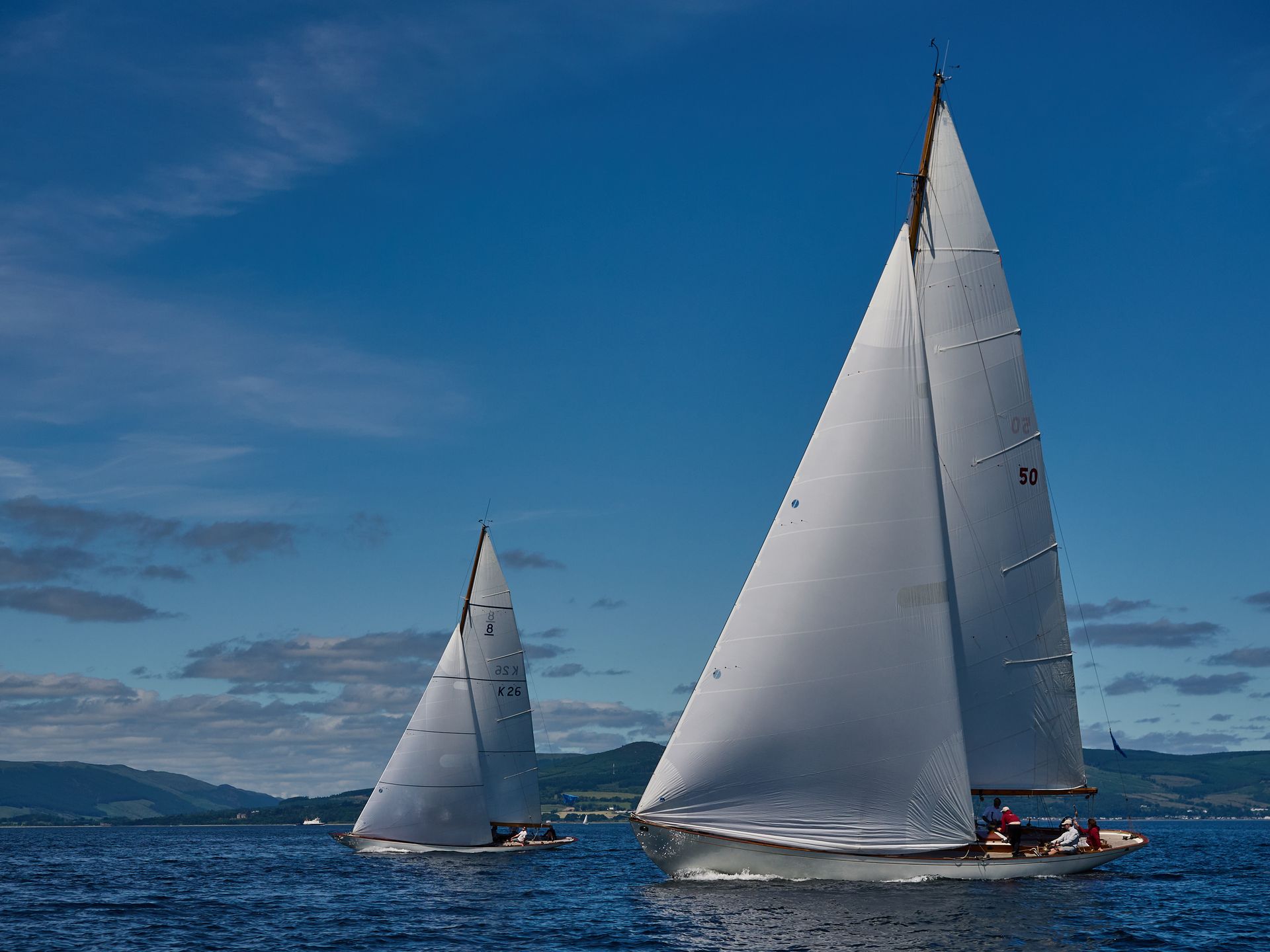
Design Sparkman & Stephens
Build Robert Jacob, New York, 1935
LOD 53ft 6in (16.3m)
Beam 12ft 5in (3.8m)
Rig Bermudan sloop
Sail No 55
After the 52ft legendary Dorade of 1930 swept up the past and threw it in her wake, the design of ocean-racing... and cruising... yachts, was changed forever. The prodigious series of 50ft+ seagoing yachts that followed from the young Olin and Rod Stephens, many of the famous inboard-rigged yawls, was unparalleled at the time and probably still is today. Their flame still burns brightly now, as the yawls have formed a burgeoning sub-genre in classic yacht racing: Dorade, Stormy Weather, Blitzen, Manitou, Sklyark, Argyll, Manitou and Baruna any many more are seen annually at classic regattas around the world. These were the S&S creations that defined what a yacht looked like, at least until the 60s, when the reign of glassfibre took over and long keels gave way to fin-and-skeg underbodies.
Sonny, built in 1935, is part of that tradition, albeit sloop rigged. At the time, the English yacht designer (and wild man) Uffa Fox wrote that Sonny was “of a type that should gladden the hearts of those who to go the sea in such small ships.”
After a career of racing in the 1930s (Miami-Nassau three times, coming second only to her sister Stormy Weather; St Petersburg-Havana; and the Newport-Bermuda among others), she was subsumed into the American war effort, then owned in peacetime by an America's Cup backer. By the turn of the new millennium, she had hit rock bottom, and was rescued and restored in 2001 by Italian yacht designer Federico Nardi at his yard, Cantiere Navale dell Argentario, for German yacht collector Wilhelm von Finck. Sonny was sold back into American ownership in 2007 and won seemingly every east cost US regatta in 2018 and most of them again in 2019.
She entered Dutch ownership three years ago and these days calls Vilanova in Spain, home. Her current crew have made their best efforts to optimise Sonny for the typical light-airs races of the summer classic regatta circuit, led by Nadir Balena, naval architect and tactician. This is, after all, a yacht designed more to cross oceans than to race around the cans. A re-rig carried out with Guido Cavalazzi and Frank Gerber of North Sails has helped with that. She came by road and sea to be at this regatta, but it has been worth every effort. As Nadir puts it: “The organisation has been amazing and the people very friendly. The race committee are at the top of the food chain.”
At the Richard Mille Cup 2026, she has sailed as part of a fleet made up largely of the titanic, the exotic and the quixotic. Along with John Alden's Blazing Star, it must have been Sonny, with her design pedigree, balanced, restrained good looks and sheer usability, that sparked the most dreams of ownership among the spectators and participants. Her pedigree in design history are powerful accessories to what is a comfortable, practical boat with a relatable rig that could take you across oceans – or win races, as she has been proving all week.
SASKIA
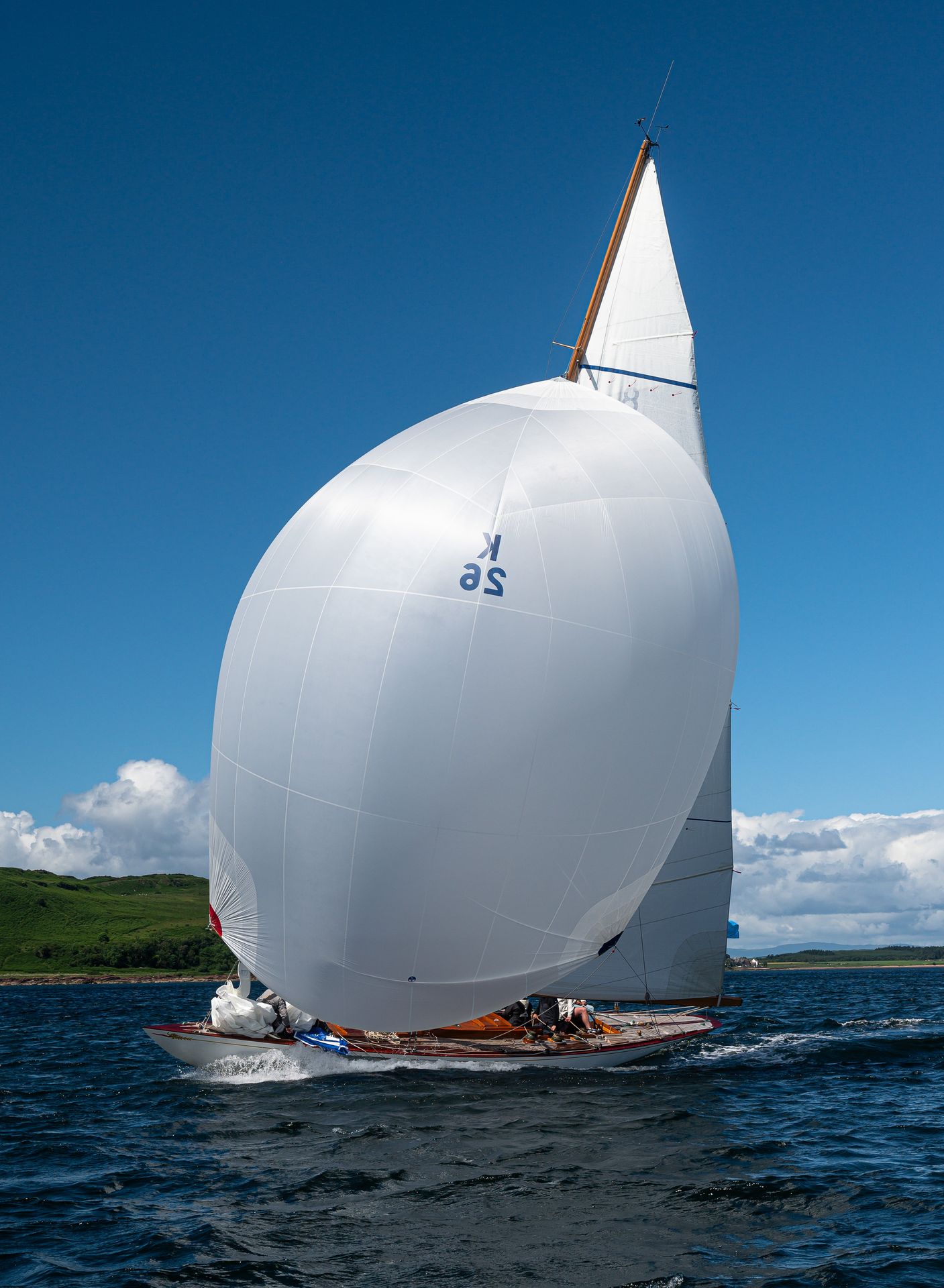
Designed William Fife III
Built Fife and Sons, 1931
LOD 48ft (14.6m)
Beam 8ft 6in (2.6m)
Rig Bermudan sloop
Sail number K26
Saskia is perhaps the most revered 8-M yacht in the world today, in a class that has been enjoying a steady revival over the last two decades. At 48ft, she’s the smallest boat in this year’s Richard Mille Cup, which says more about the regatta than the boat. Her diminutive size, narrow beam, low topsides and needle-sharp bow, give her the archetypal look of a Second Rule 8-M; something like a ballerina on water.
Saskia is probably the most iconic 8-M yacht ever built. There is a lot of competition for that title, but Saskia’s racing history is an unusually strong, unbroken cord to her origins, with nearly continuous commission throughout her 95 years afloat. She was built for the 1931 Seawanhaka Cup, then one of the most prestigious races in the world. She won it. She sailed for Britain at the now-infamous 1936 Berlin Olympics, at Kiel; it’s said that Adolf Hitler stepped aboard at one point. In 1938, she won no fewer than 50 races in a single season. In 1954, she raced for the Sayonara Cup, Australia’s top event for round-the-cans racing in big boats. She won, returning the cup to the Royal Sydney Yacht Squadron after 34 years dominance by the Royal Victoria. She kept racing for another 52 years, winning more races than history remembers.
She was taken back to Britain in 2007, to partake in the centenary celebrations of the International (aka ‘Metre’) Rule. The big event was the centennial worlds, here on the Clyde. She won her class. There is, in the classic 8-M classes, the Sira Cup also, for best overall classic. Saskia won that too. That year, 2007, there was also an 8-M centenary regatta in Cowes; and you’ve already guessed who won it.
By that time, Saskia needed restoring, work that was carried out by Absolute Projects in Lisbon, Portugal. By 2013, she was back at it in the Solent, taking class wins at the annual British Classic Yacht Club regattas. In 2013, she took the overall Panerai prize, something not many yachts have managed to wrest from the ‘fighting forties’ (NY40 class yachts) Chinook and Rowdy. She also took the concours win for good measure.
She’s one of the few of Fife III’s creations not to have left Scotland, having returned to Fairlie on the Clyde in her last ownership. Her current owner, Richard Haines, only bought her at the start of this year, and only had her recommissioned and ready three days before the start of the Fife Regatta, where she competed before the Richard Mille Cup. Richard is better known as owner of the fast Essex Oyster smacks Alberta and Kate, and he arrived with his smack crew to spend 48 hours learning to sail an 8-M before heading out with Saskia, to continue doing what she’s done for nearly a century.
BLAZING STAR
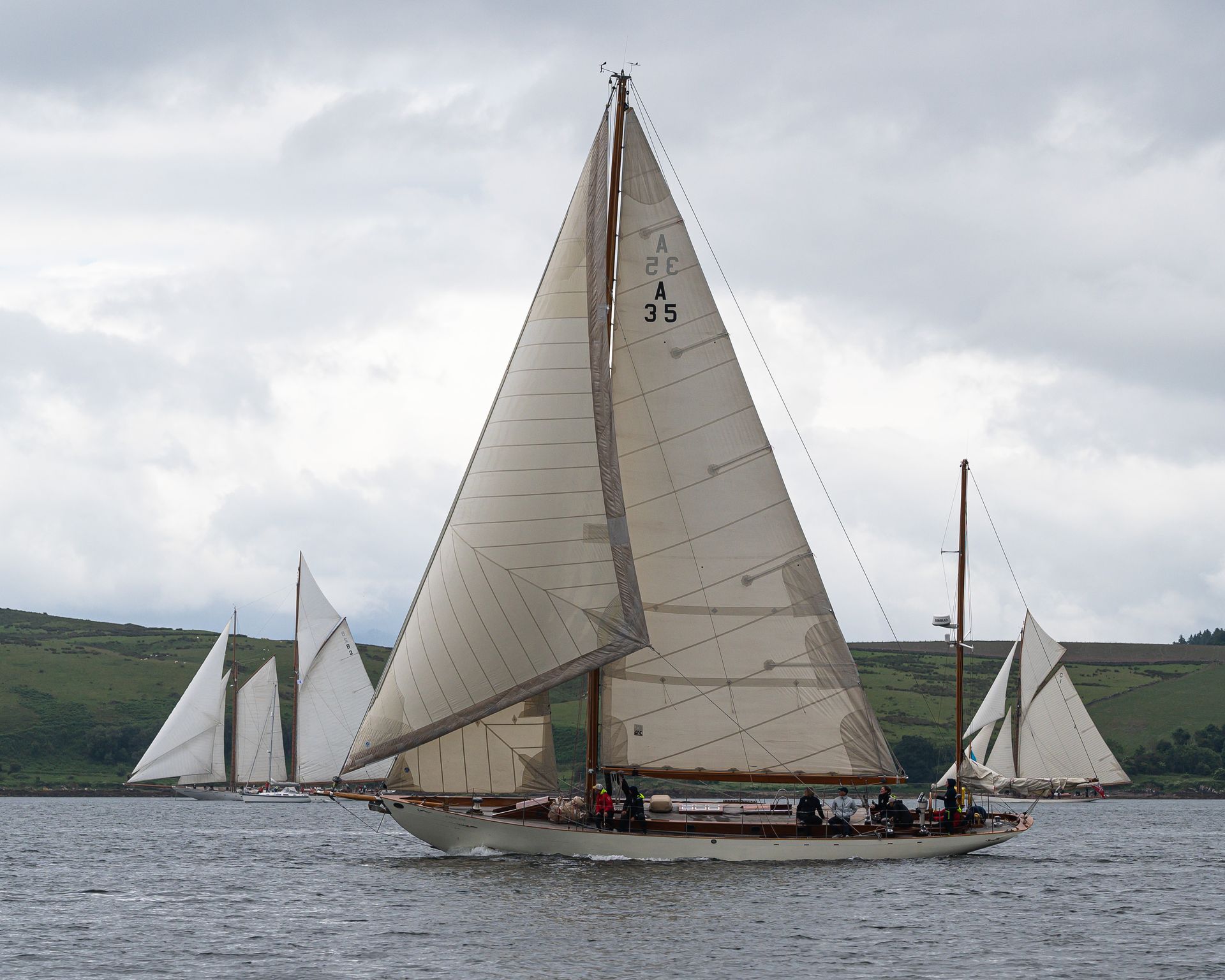
Design John G Alden
Build Reed-Cook Construction Co, 1930
LOD 55ft (16.8m)
Beam 12ft 6in (3.8m)
Rig Bermudan yawl
Sail number A35
Blazing Star is the sixth built in a family of eight similar yachts from American designer John G Alden. Alden’s own star blazes rather less brightly on this side of the Atlantic than it does in America, where his designs are rightly recognised for their salty good looks and seaworthiness, a few of them sporting distinctive offset companionways for better interior space. He is best known for his famous Malabar schooners, designs evolved from his initial schooling under BB Crowninshield, wisdom that he later carried on in his own design practice after setting up shop in 1909. The Malabar schooners were loosely inspired by the Gloucester fishing schooners, then still active, and among the most iconic of all boats from the days of working sail; but their distinctly yachty look and attractive cockpit coamings no doubt endeared them to those who could afford them.
Three wins in the Newport Bermuda Race (in 1923, 1926 and 1932) can’t have harmed either, along with line honours in the windy 1927 Fastnet; that was won by the 47ft Malabar IV, a replica of which is in build in Cornwall now. Away from the schooners, Alden’s bermudan cutters and yawls are less known than they ought to be. His 1936 design, Kirawan, won the windy 1936 Bermuda Race, beating off anything S&S came up with at the time; she was subject to a recent, deep restoration on Rhode Island at the LMI yard. A pattern is clear: when the going gets tough, make sure you’re in an Alden yacht.
Blazing Star, from 1930, comes from her designer’s heyday as the king of the Newport Bermuda Rae. Her history involves many race wins under Ramon Antoine Engholm, commodore of the Royal Canadian Yacht Club; and more unusually, a grounding in the 1970s while implicated in a drugs case and on the run from customs officials. She was sold to Englishman Clive Emmerson of the Gweek Quay Boatyard in 1995, who was in charge of her restoration until his death in 2011.
Blazing Star was bought by her current owner, a Belgian sailor on the look-out for a nice classic, having experienced the magic of sailing on Moonbeam IV, 13 years ago. She’s been under the watchful eye of Breton skipper Loic Melliand for the last three years, and lives in Vannes, Brittany. Loic and his partner have set up Heritage Classique, to offer year-round services to classic yacht owners. Another string to this bow is plentiful undercover winter storage at Vannes, and a sailing school, training the next generation to run classic yachts like this. Blazing Star sailed to the Richard Mille Cup on her own hull this year, with a crew of relative novices, who also acted as race crew at the regatta. The rest of her summer season takes her back to Brittany with the fleet of this year’s Classic Channel Regatta, then onto the giant quadrennial festival of the sea at Brest. If there were a Corinthian prize, she and her crew would surely win it.