
Time: 20:35 – by Steffan Meyric Hughes
With the wind forecast to pick up to around 15-20 knots today, crews attended the morning skippers’ briefing in anticipation of the third race in this year’s Richard Mille Cup racing, in Largs Bay. The 25-mile King’s Course is today barely changed from the birth of yachting on the Firth of Clyde, when boats to the designs of Fife, Watson and Mylne would have slipped past the same green shores, under the same heavy skies and deep waters; and to the same course. Many of the yachts those men built are here with us today, jostling for position at the start line, just as they might have in 1891 when the course was first raced by Kaiser Wilhelm II and British royalty. Barring the Targas and the RIBS run by race management, there’s nothing to tell what century we are in.
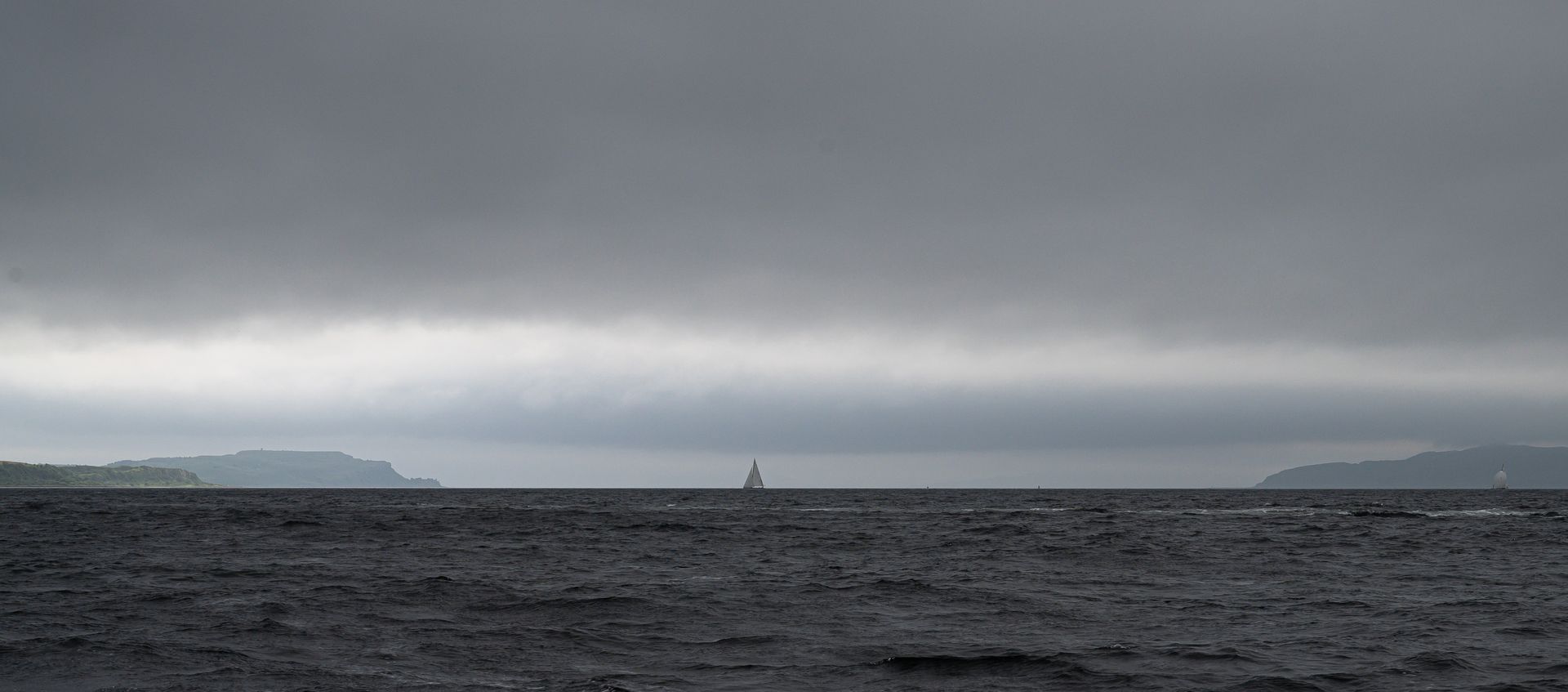
After two days of light, changing breezes, race three proved the endless and rich variety offered up by these waters, and the fleet got off to fast start, running north between the mainland and the Isle of Bute, poling spinnakers out to hasten them onward. It was wind enough for the bigger boats to realise the promise of their waterline length, and they started to extend their lead from the start over the rest of the fleet, as they broad-reached west towards Rothesay after rounding the first mark. Breeze became wind, and the Bay of Largs was lit up with white horses marching northwards over a sea of dark, brushed steel. Elena established a lead that grew and grew as the race went on, followed by Mariquita and Moonbeam IV, both slowly overhauled by Atlantic. These three remained in contention until the very end.
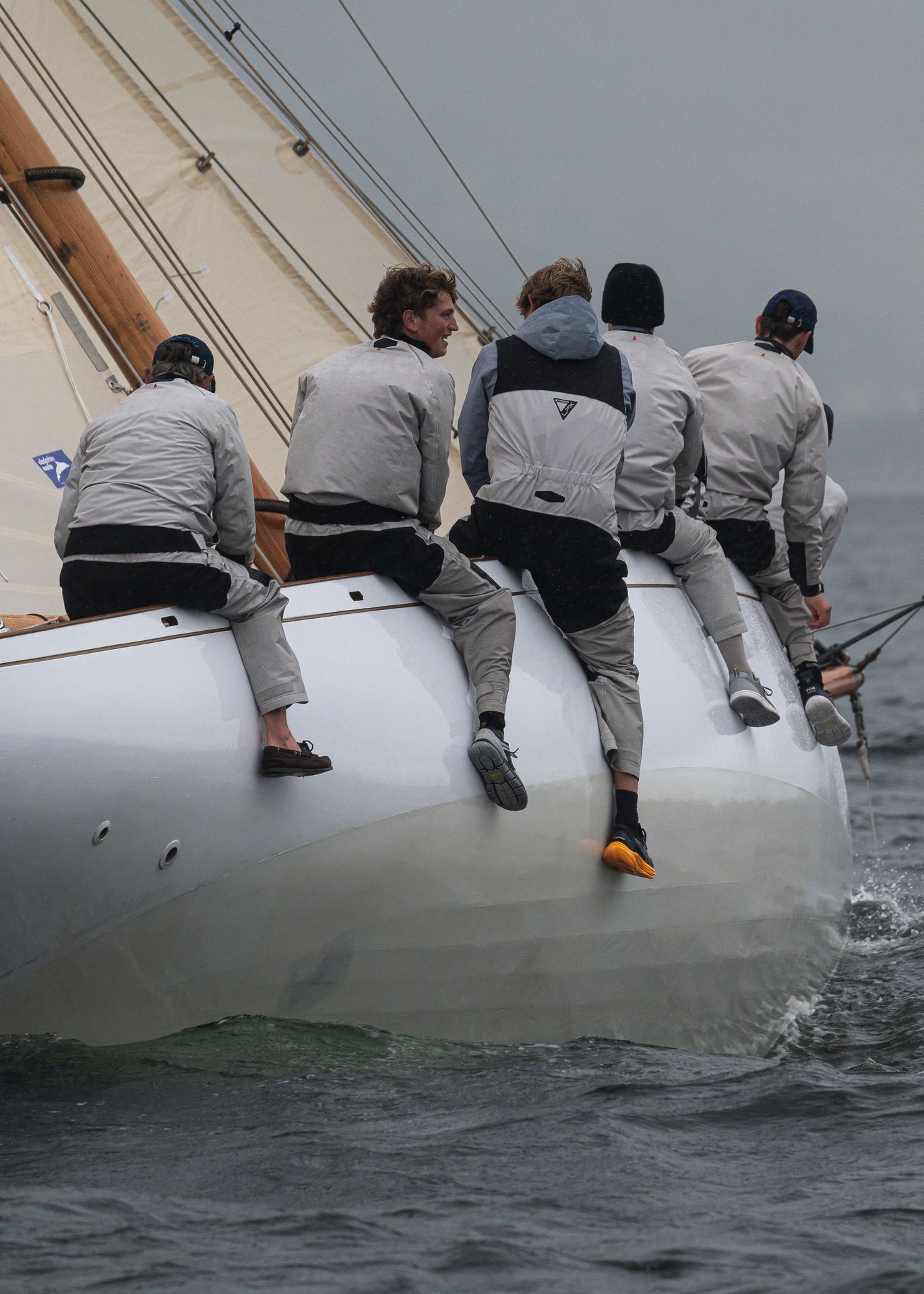
In the smaller boats, Kismet made a good start and led her own class (Class Four) as well as the bermudans in Class Three, with Blazing Star giving chase. By noon, the wind had moderated, leaving a soft mist over the bay. The big boats behind Elena remained in contention, but things in the smaller classes had been shaken up, with Sonny now leading Saskia in Class Three, followed by Kismet leading Class Four.
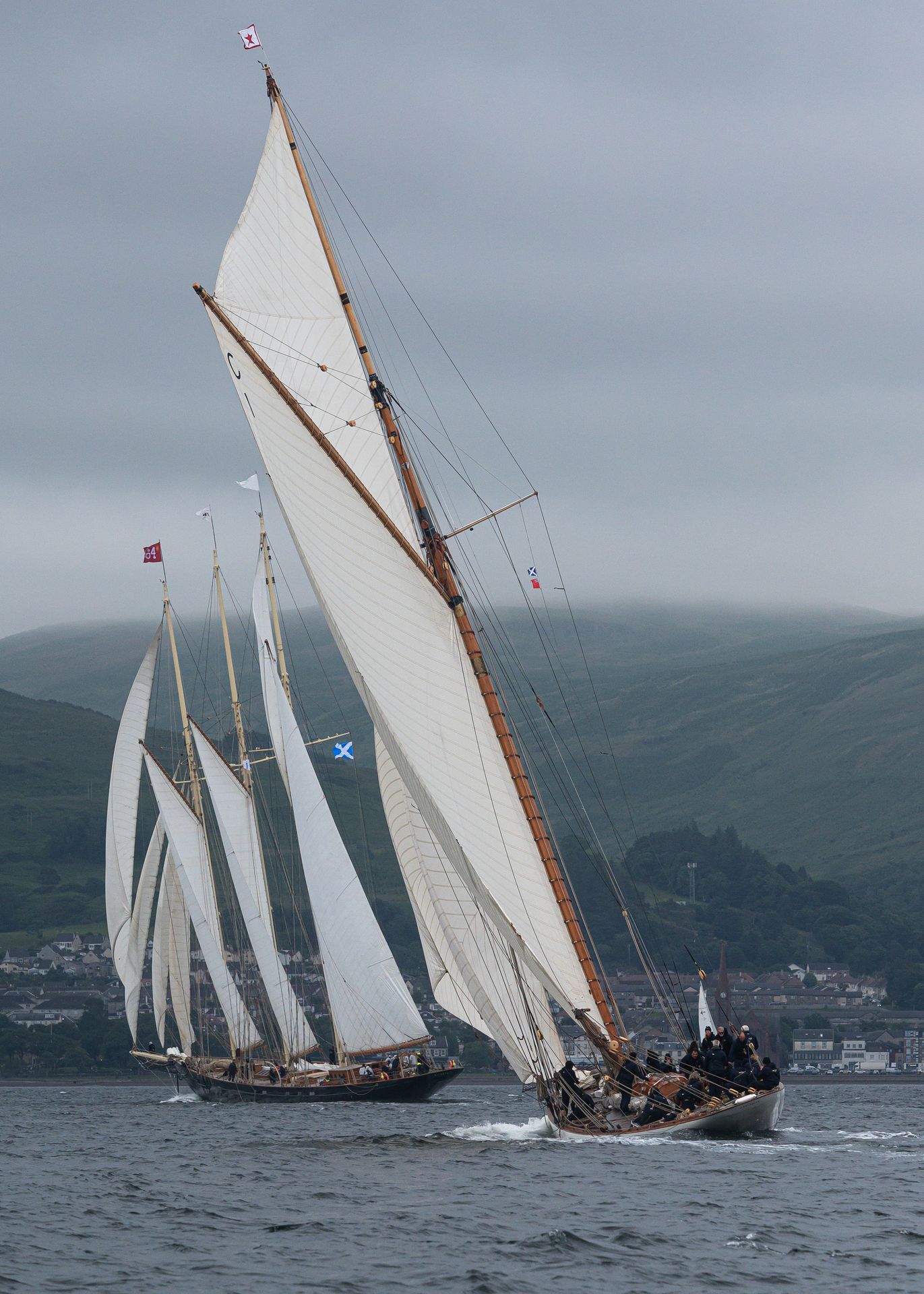
By 1.15pm, less than three hours after the start, Elena’s lead was unassailable as she made the final turn to beat south along the mainland to reach the finish line back at Largs Yacht Haven. The mist cleared as the great schooner tacked along, heeling to the breeze at nearly 10 knots. It was no competition.
The battle for second placed line honours was quite the opposite. Twenty minutes after Elena crossed the line, Mariquita (Class Two), Moonbeam IV (Class Two) and Atlantic (Class One) appeared, just as a soft rain began to fall, and the three grand dames had a three-way tacking match to make the line. It was a question not of boat speed, but of who was forced to tack first. Mariquita ended up crossing the line first after a late tack by Moonbeam IV, with Atlantic also holding her course, appearing seemingly out of nowhere, and clearing the line about 90 seconds later. Moonbeam IV cleared the line less than a minute after.
Away from the action at the head of the fleet today, Kismet in Class 4 (small gaffers) put up another good fight in her class, sailing fast on the upwind legs as well as on the downwind and reaching legs. This defies the truism (rather, the ‘falsism’) that gaffers can’t sail to windward. Stuart Finnerty, one of the ten-strong crew on Kismet this week, is acting as mast man and headsail trimmer, and we caught up with him in the bar after the race. “We had a good start and a good run in up to 20 knots of wind. We made two headsail changes, which is quite hard in these conditions [Kismet flies three headsails in total] but boat captain Jamie Bollingbroke made a good call to do so. It was pretty full on and tricky towards the end in the rain, but it was a good day. We’re racing well and hoping for a good result.”
The forecast tomorrow is for the temperature to drop a little, with less wind and more rain, before things clear away at the weekend and onwards.