
Richard Mille Cup, Day 8
The schooners and the big Fife gaffers, yachts that need no introduction such is their fame, may have stolen the show at this year’s Richard Mille Cup; but the smaller gaffers and bermudans have been steadily winning people over all week too.
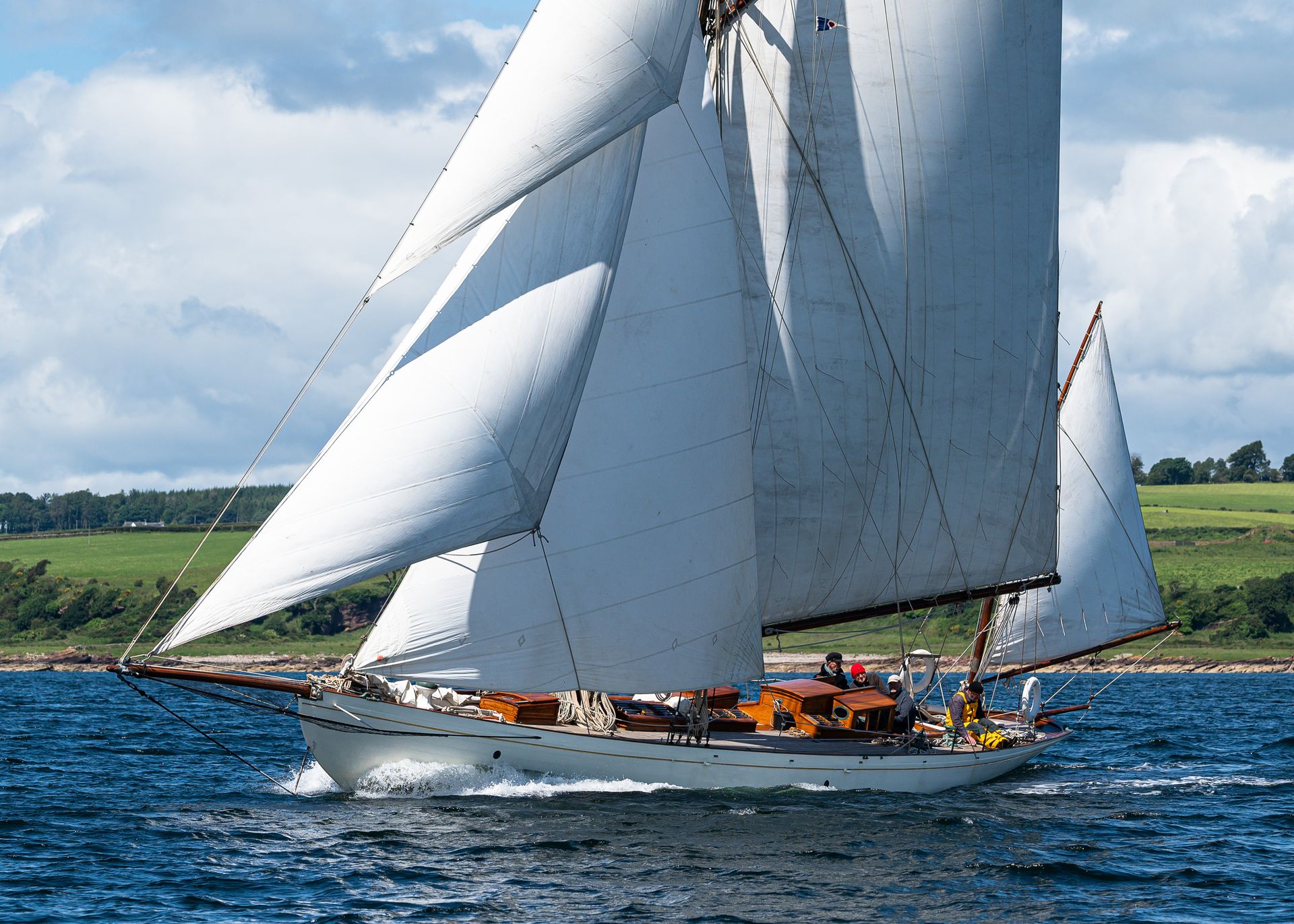
PATNA
Designed: Charles E Nicholson
Built: Camper & Nicholsons, 1920
LOD: 54ft 9in (16.7m)
Beam: 11ft 8in (3.6m)
Rig: Gaff yawl
Patna was designed by Charles E Nicholson, England's answer to William Fife III and GL Watson, and was one of the first boats built after the First World War by Camper and Nicholsons. She was intended as a cruiser/racer, and her first owner raced her for the best part of the 1920s on the Solent, against his rival on Cyra, a JS Highfield, better known for his invention of the highfield lever, some would say among the most dangerous hardware ever fitted to a yacht!
Her many adventures over the years that followed in the turbulence of the 20th century include at least one Atlantic circuit and 11 gales in the early 1980s, but she is today best known for the extraordinarily authentic restoration carried out by Greg Powlesland and his wife Katie Fontana from 2005-10. Greg was already revered in the world of yacht conservation for his earlier work to bring the Victorian-era Nicholson beauty Marigold back to life, a tale in itself. Patna's restoration, which retained much of her fabric (and, crucially, her interior, which is today like a time warp), was no different. Winning the concours d'elegance at Monaco Classic Week in 2015 proved the point: they don't give that one away – in fact, you might fail if your slot-head screws are not all aligned. Today, she operates simply, as a boat run on a shoestring by a bunch of friends. Patna sailed to this Richard Mille Cup (her second) on her own hull, over two weeks, and close observers might note that her sails are cotton. It's not something Greg and Katie make a big deal of, but then to have cotton sails and shout about it would rather bust the flush. It is, however, a serious commitment to echoing originality that is unrivalled almost anywhere in the world. As Greg put it shortly after Patna's relaunch, he and Katie were looking to preserve “The aesthetic of hand and eye that has been discarded by today's visually barren, quick-fix, production-line society.” A fine dream to dream, and an even better one if you can make it come true.
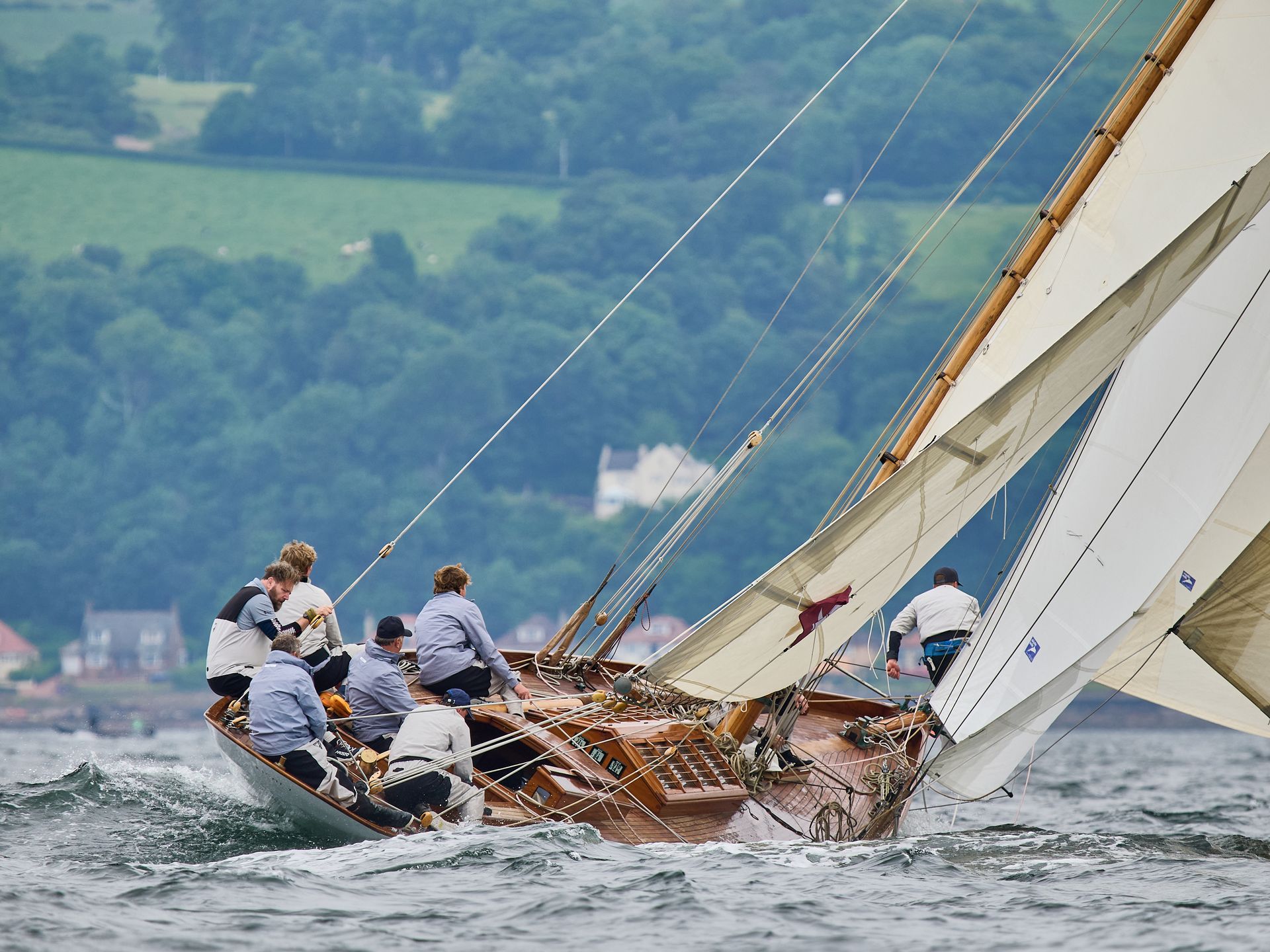
KISMET
Designed: William Fife III
Built: William Fife & Sons, 1898
LOD: 48ft 6in (14.8m)
Beam: 10ft 1in (3.1m)
Rig: Gaff cutter
Kismet is a later example of an extraordinary chapter in the history of the classic yacht revival, coming as she does from the stable of the 'West Mersea houseboats'. Some of the most beautiful racing yachts the world knew before the war found themselves in the mud flats of West Mersea, a small island connected to the English mainland by a tidal causeway, including Mariquita, also racing in this 2026 Richard Mille Cup. Their masts were cut off and their lead keels were removed and sold for scrap. The sight of slender, racing yacht hulls, with spoon bows and long, graceful counter sterns sprouting shed-like living quarters above was a bizarre, but common sight in West Mersea from the middle of the 20th century until around two decades ago, by which time, most of them had been swallowed by the classic yacht restoration movement and returned to their original splendour. Kismet is a smaller example of a West Mersea houseboat, but served nonetheless as a home from 1949 until 2004, when she was pulled out, and a restoration was started by boatbuilder Adrian Wombwell, helped in the design elements by local man David Cooper, better known for his design work with post-war English designer Kim Holman and, later, Don Pye; they of Holman and Pye. Adrian rebuilt Kismet on her original keel for Richard Matthews, founder of Oyster Yachts, and she's been very actively and successfully campaigned ever since from her home base, Fox's Marina on England's Suffolk coast. Her victories since restoration are too many to list. With an unbroken run of bullets by the sixth day of sailing here at the Richard Mille Cup, her victory here is assured too. Kismet is the perfect combination of beauty and grace; she might need a bigger trophy cabinet.
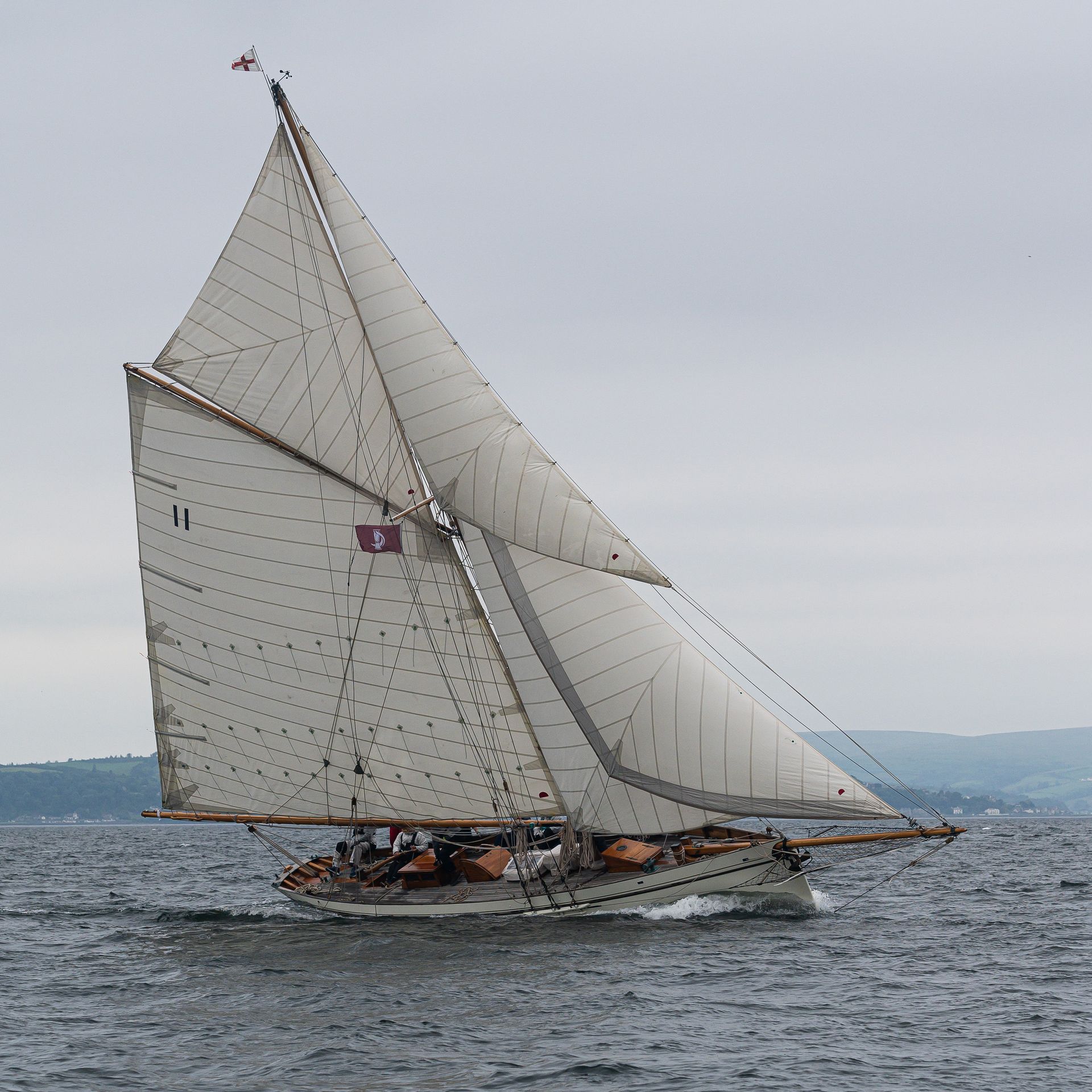
THALIA
Designed: George Wanhill
Built: George Wanhill, 1887-8
LOD: 45ft (13.7m)
Beam: 10ft 1in (3.1m)
Rig: Gaff cutter
One hundred and seventy five years ago, there was a yacht race in which no fewer than three designs by a Mr Wanhill took part. His name is almost entirely forgotten now, but Thalia, as perhaps the last surviving yacht to his design, lives on; as does the race, the 100 Guineas Cup, now better known as the first ever America's Cup.
Thalia was the first classic for British sailor David Aisher, who is part of a lineage in top-flight racing yachtsmen. His late uncle, Robin Aisher OBE, represented Britain in three Olympics, taking bronze in the 5.5-M class in 1968. He was also part of the winning team in no fewer than three Admiral's Cups, in the days when it was the F1 of international ocean racing – 1975, 1977 and 1981, in the 'Yeoman' yachts. David Aisher's own yacht racing history has matched that, with ownership of a J24, Sigma 33, Sigma 38 and a J109, among others. His last boat was a 46ft carbon fibre-hulled racer. Until, that is, 2011, when he flew to Cariacou in the West Indies to see a classic for sale: the 1888-built, Wanhill-designed, Thalia. David is your classic English yachtsman of the old school: not, perhaps, the sort to gush about love at first sight, but he immediately bought Thalia as a family yacht, and has been sailing and racing her ever since. Thalia is now the closest link to the original America's Cup, and she came to this year's Richard Mille Cup by road (lorries sail so much better to windward, as David reminds us). She has more than a hint of the Essex oyster smack in her pretty, purposeful lines, but much of her real intent is lost to the mists of history. She's the oldest boat here this week. Friend Peter Wright organised the crew; and his dog, on board all this regatta, has raised a fond smile all week.